
Respawn by Razer2026
Get Lost in the Game
A series of short films where Respawn gum and mints pull gamers into the worlds they play.
- My role
- Art direction · Storyboards · Execution
- Studio
- Carbon
My part in the work
I was involved from the first concepts and storyboards through the shoot and execution, working alongside Charles Cheong under Matthew Crescenzo’s creative direction. I helped shape the interaction between the gamer and the game character, with a clear plan for how we could film it and build it in post.
A product made for the moment
Respawn was launching gum and mints for gamers. The brief was to build awareness and encourage trial by making the product part of an authentic gaming ritual. The audience already knew the language of games, so the humour had to feel at home in that world.
The idea grew from the way players fill a game with their own imagination. As they get absorbed, the boundary between the screen and the room starts to blur. In our films, a piece of gum or a mint is the thing that crosses it.
A small action, an unexpected response
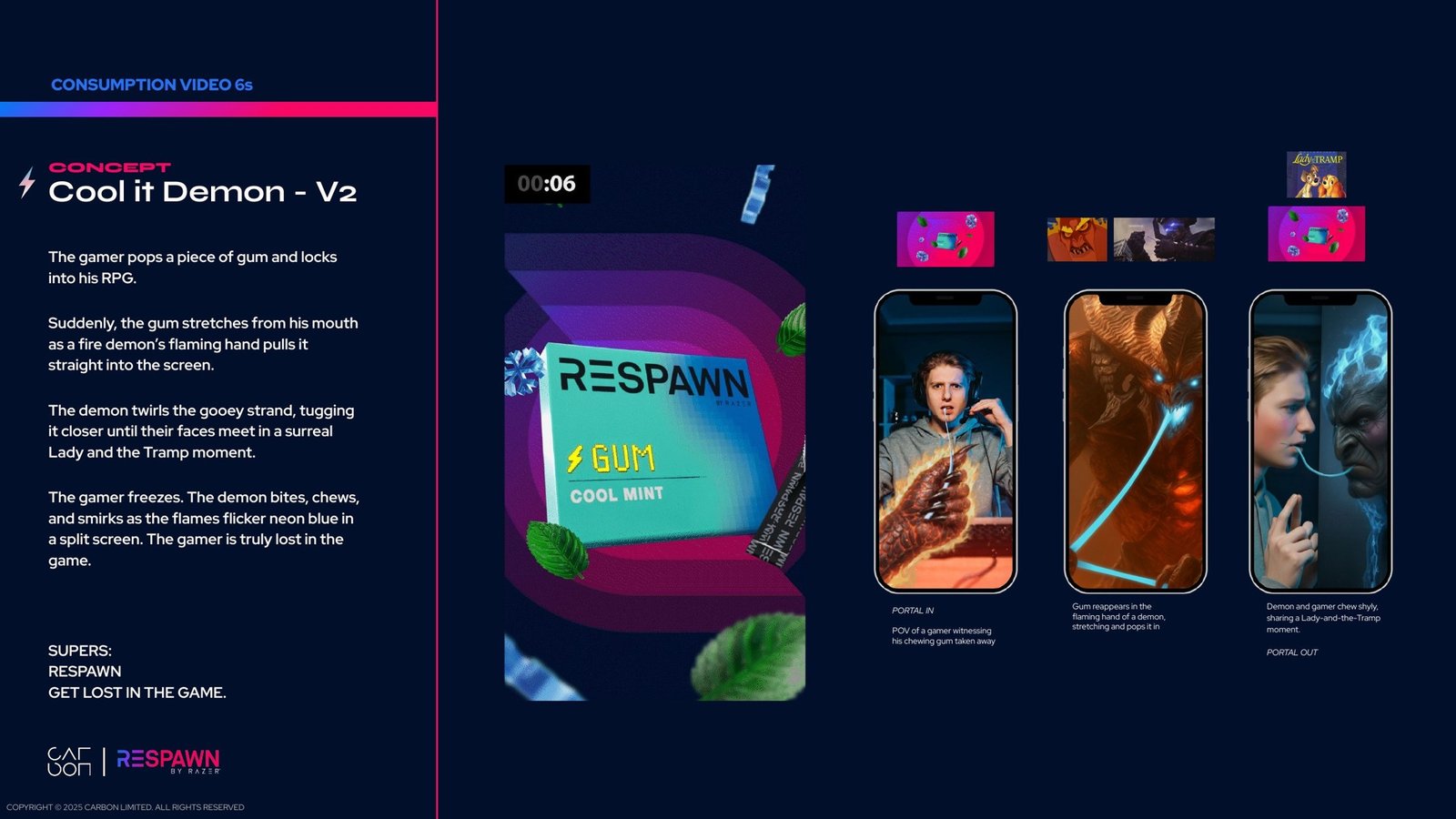
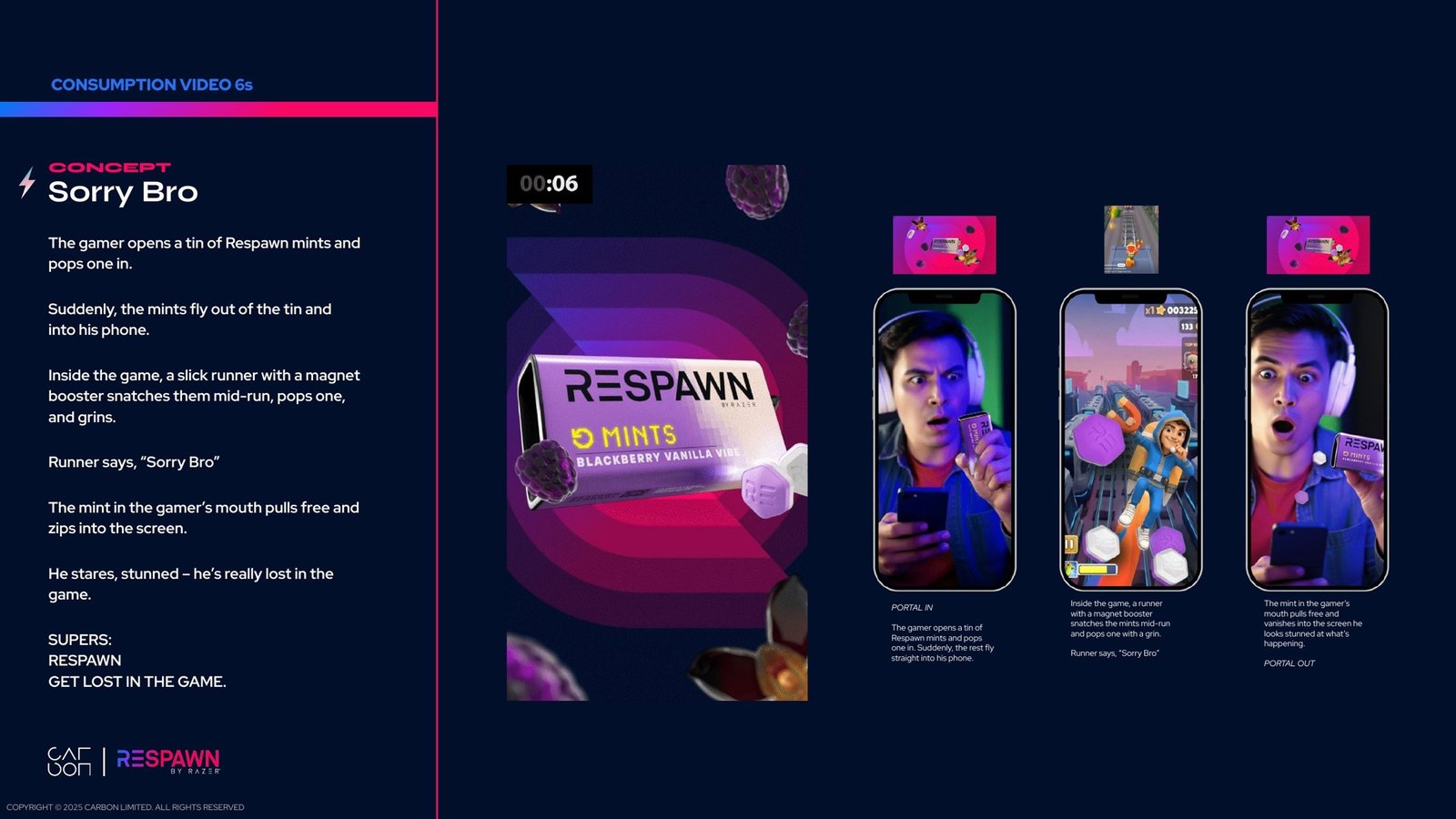
We developed a series of exchanges: a demon taking a gamer’s gum, a runner stealing mints, an NPC demanding a piece, and a crowd of game characters suddenly noticing the player’s snack. Each gives the product an active part in the joke.
The short format made timing a design decision. We needed to establish consumption within the first two seconds, then make the character interaction immediately readable. I kept the storyboards simple and used split screens to hold the gamer and character together. That gave the shoot and CG teams a clear structure to work towards.
Building the rooms around the product
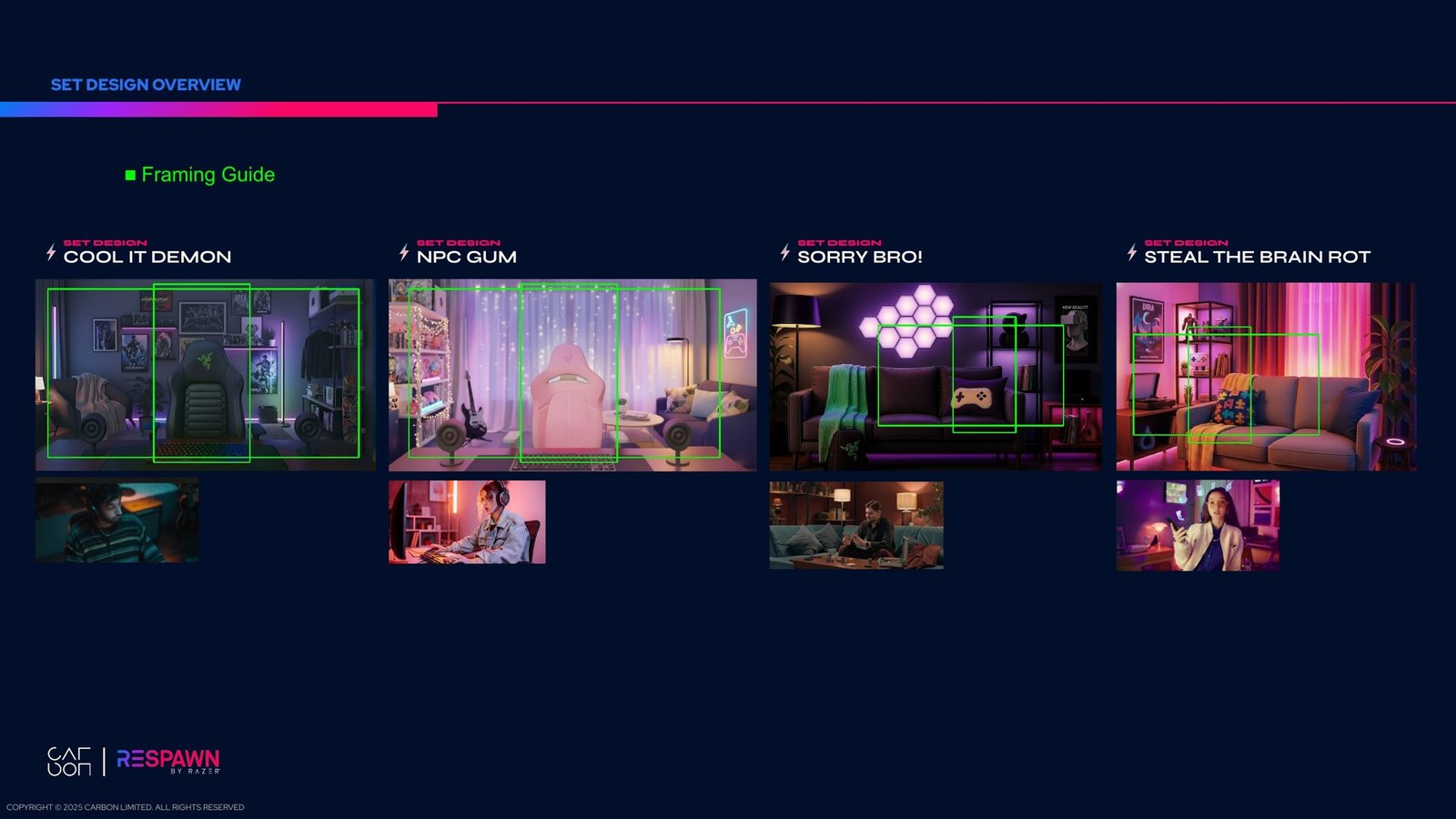
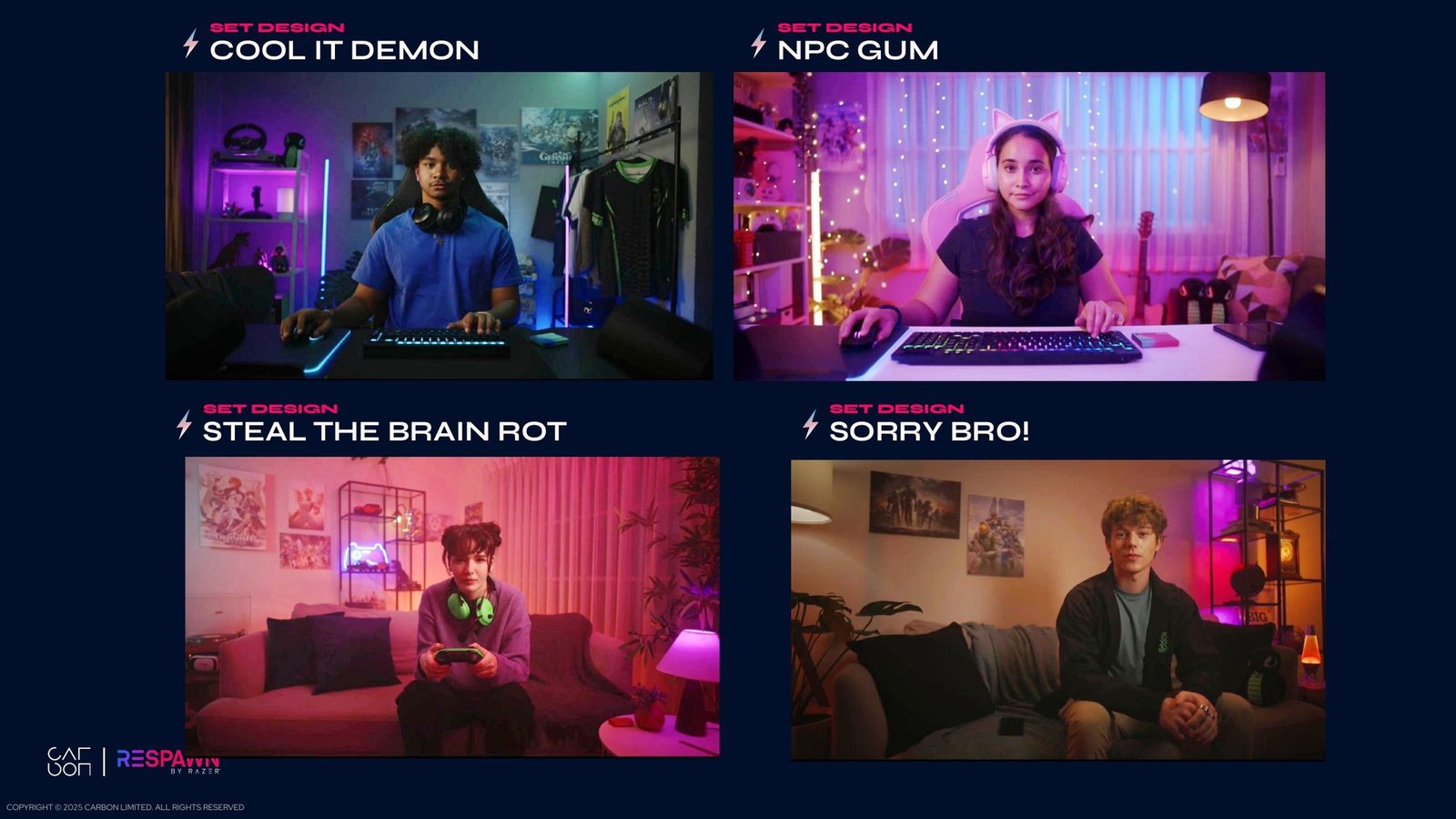
Before the shoot, we worked through expressions, framing, wardrobe, lighting and set plans. Blue, pink and purple environments connected the rooms to the product flavours, with Razer peripherals and small personal details making each space feel lived in.
Wide lenses and expressive reactions supported the awkward humour. Framing guides planned room for the square and vertical adaptations from the shoot, keeping the product and performance visible across formats.
Bringing the two worlds together
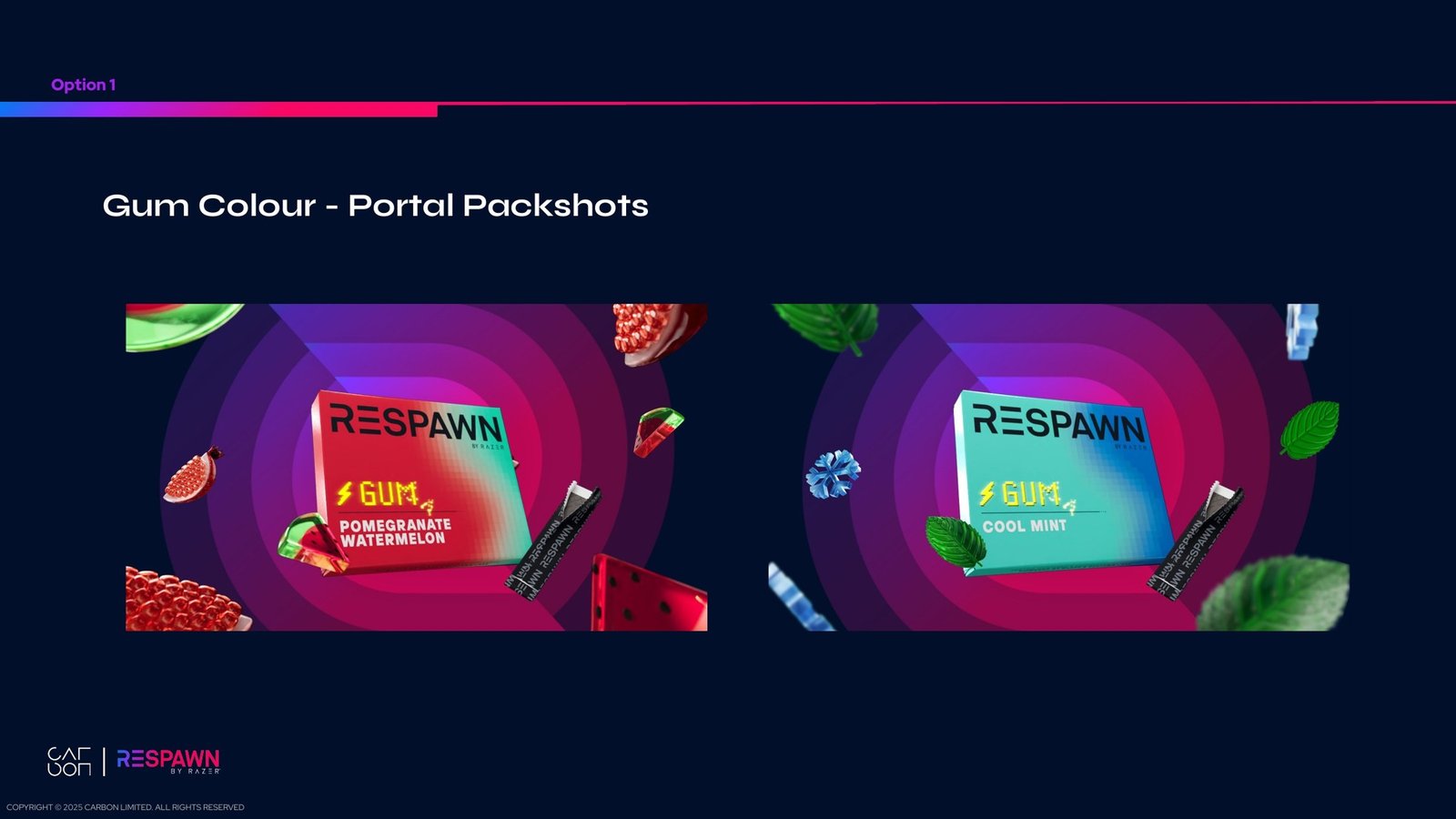
The live performances became one half of the exchange. CG characters, gum and mints supplied the other, while the colourful portal and packshot system connected the films as a series. Later client updates refined details down to the gum colour and the final product frames.
The four films share a clear product moment, an exchange between gamer and character, and a consistent portal and packshot treatment.
Carbon team
- Creative direction
- Matthew Crescenzo
- Associate creative direction
- Charles Cheong
- Art direction and motion design
- Jatin Gupta
- Design director
- Kyle Nai
- Project managers
- Aisyah · Aigner
- Designers
- Blair · Yian · Ying Lin · Ching tong Poy